Thinking about building a new home in Covington? It can be exciting to picture your layout, finishes, and move-in day, but new construction usually takes more time and more decisions than many buyers expect. If you want a clearer picture of the timeline, inspections, walkthroughs, and local approval steps, this guide will help you plan with confidence. Let’s dive in.
Covington new-build timeline basics
In Covington, a new build can move quickly once construction is underway, but your full timeline often starts well before the first slab is poured. Design choices, permit review, financing, site requirements, inspections, and final paperwork all affect when you can actually move in.
For custom homes, the design phase often lasts about 3 to 6 months, followed by permits and approvals. After that, construction commonly takes at least 12 to 16 months, with delays possible depending on the lot, weather, selections, and approval path.
If you want a faster route, a stock plan or spec home may shorten the process. In some cases, you may still get to choose certain finishes if the home is early enough in construction.
Why new construction timing varies
Many homes built for sale in the South are completed within 4 to 6 months after construction starts. Still, a meaningful share take longer, including 7 to 9 months, 10 to 12 months, and 13 months or more.
That gap matters because the visible build phase is only part of the story. Your total timeline may also include lot review, flood-zone documentation, drainage planning, utility approvals, inspections, and closing steps.
St. Tammany Parish remains an active permit market, with 738 single-family new-construction permits issued parishwide in 2023. That activity shows steady building demand, but it does not mean every project moves at the same pace.
Covington permits and approvals
Before building starts, the city requires a detailed permit package for residential new construction. That package includes a signed application, proof of ownership, flood-zone documentation, a drainage plan, and a stamped survey.
Plans must be stamped and submitted electronically. They also need to include foundation, floor, elevation, electrical, plumbing, and mechanical drawings, along with energy-code documentation and a Manual J report.
If sewer or water extensions are needed, the city requires approval before the permit can be issued. That means utility questions should be addressed early, especially if you are building on a lot that needs more than a standard connection.
Flood review can affect your schedule
Flood review is a major early step for many Covington properties. The city reviews floodplain information for a property, and if the home is in a flood hazard area, new construction must be elevated at least one foot above base flood elevation.
Before the home can be occupied, the city also requires an Elevation Certificate from a professional engineer or surveyor. That adds another key document to your final path toward move-in.
If the property is in a FEMA Special Flood Hazard Area, flood insurance is also likely required as part of your total monthly housing cost. That is one more reason to review the lot carefully before you commit.
Historic district and zoning considerations
Some lots have an added layer of review. If your property is in Covington’s historic district, proposed construction or major exterior changes require review and a Certificate of Appropriateness.
Planning and zoning can also shape your path if the lot needs zoning verification, subdivision review, rezoning, or a conditional-use permit. In other words, two lots in the same city can have very different timelines depending on location and status.
What happens during construction
The home-building process usually follows a clear sequence from contract to closeout. In simple terms, it often moves through permit submittal, site work and foundation, the building shell, rough-ins, exterior finishes, interior finishes, final sitework, and closeout.
This structure helps you understand what is happening and when key decisions may come up. It also reminds you that delays in one phase can push the next phase back.
Here is a practical way to think about the process:
- Pre-construction: plans, pricing, financing, permits, approvals
- Site and foundation: lot prep, drainage work, slab or foundation work
- Framing and shell: framing, roofing, windows, exterior structure
- Rough-ins: plumbing, electrical, HVAC, ductwork
- Interior and exterior finishes: drywall, flooring, cabinets, paint, trim, exterior details
- Final closeout: punch list, orientation walkthrough, final documents, closing
Your contract and change orders matter
A new-construction contract is more than a purchase agreement. It typically outlines the scope of work, timing, payment requirements, communication expectations, and how project changes will be handled.
That last part is important. If you request changes after plans or selections are approved, a change order can affect both cost and completion timing.
If you are choosing between a fully custom build, a semi-custom plan, or a spec home, ask early how much flexibility you actually have. A faster timeline often means fewer changes and fewer finish choices.
Walkthroughs and inspections to expect
Many buyers assume a final walkthrough is enough, but phase inspections can be valuable during new construction. Common checkpoints include the foundation stage, pre-drywall, and final punch-out.
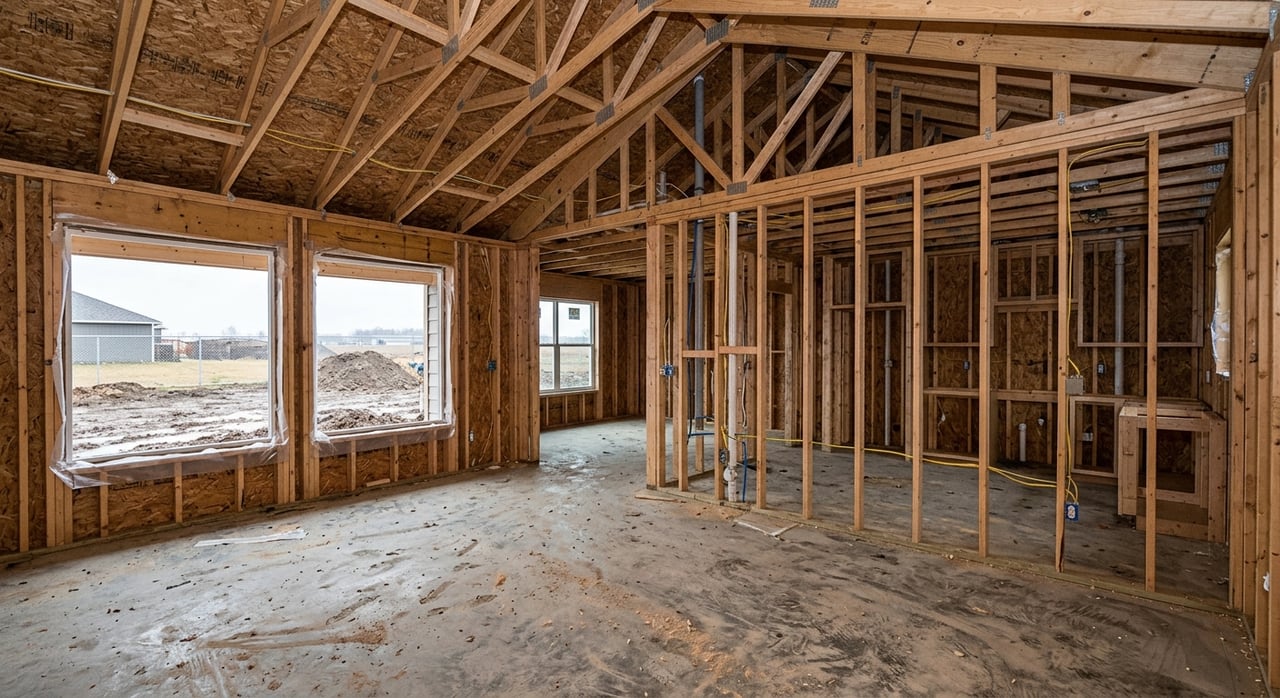
The pre-drywall inspection is often one of the most useful steps because framing, plumbing, electrical, and ductwork are still visible. Once drywall goes up, those systems are much harder to inspect.
The final punch-out inspection usually happens closer to closing and focuses on visible systems, finishes, and remaining corrections. This is also when an orientation walkthrough may help you learn the home’s features and maintenance basics.
Covington inspection logistics
In Covington, inspections are conducted Monday through Friday from 8 a.m. to 4:30 p.m. They must be requested one business day in advance, and the city lists each inspection at $75 as of February 18, 2026.
The city also requires a spot survey before the pre-pour inspection and an as-built survey before final inspection. The Certificate of Occupancy will not be granted until the as-built survey and related project documents are submitted.
That final detail is easy to overlook, but it matters. Even if the house looks done, missing paperwork can delay your move-in.
What to do before closing
Closing is the final step, but it should not feel rushed. Your lender must send the Closing Disclosure at least three business days before closing, giving you time to review your numbers.
Before signing, inspect the home and confirm that agreed repairs or punch-list items have been completed. This is your chance to make sure the home delivered matches the expectations in your contract.
It also helps to review your total monthly payment, not just principal and interest. Taxes, homeowner’s insurance, mortgage insurance, flood insurance, HOA fees, and maintenance can all affect your real budget.
How taxes and occupancy connect
In St. Tammany Parish, a new home is placed on the tax roll when it is substantially complete. The assessor notes that the best proof of substantial completion is the certificate of occupancy issued by the parish or municipality.
That means final city paperwork affects more than your move-in day. It may also influence when the property is recognized as complete for tax purposes.
Builder warranties after move-in
One of the benefits buyers often like about new construction is warranty coverage. A builder warranty usually covers permanent parts of the home, though exact terms depend on the builder and contract.
Many new-home warranties provide about one year of workmanship and materials coverage, two years for HVAC, plumbing, and electrical systems, and up to 10 years for major structural defects. You should always read the actual warranty terms closely.
It is also helpful to know that a builder warranty is different from a separate home warranty or service contract. If you ever need to make a claim, put it in writing and keep records of your communications.
A smart follow-up after move-in
Even after closing, your checklist is not over. A 10- to 11-month inspection can help catch issues that show up after the home settles and before a typical one-year builder warranty expires.
This timing gives you a chance to identify problems while warranty protection may still apply. For many buyers, it is one of the most practical post-closing steps they can take.
Key questions to ask before you build
If you are comparing a resale home with a new build in Covington, the biggest tradeoff is usually customization versus speed. A new home may give you more say in layout and finishes, but the process often takes longer and requires more decisions along the way.
Before you move forward, ask questions like these:
- What is the estimated timeline from contract to closing?
- Is this a custom, semi-custom, stock-plan, or spec home?
- What selections can you make, and by when?
- How are change orders handled?
- What extra fees should you expect?
- Are there HOA dues or restrictive covenants?
- What warranty coverage is included?
- Will the lot require flood-related elevation steps or added documentation?
- Are sewer or water extensions needed?
- What nearby development plans could affect the area?
Clear answers upfront can help you avoid surprises later.
Building new in Covington can be a great fit if you value a fresh start, modern systems, and the chance to personalize your home. The key is knowing that the process involves more than construction alone, especially when permits, flood requirements, inspections, and final documentation all play a role.
When you go in with a realistic timeline and the right local guidance, you can make smarter decisions from lot selection to closing day. If you want help weighing new construction against resale options in Covington or anywhere on the Northshore, connect with Charlotte Johnson for clear, hands-on guidance.
FAQs
How long does new construction usually take in Covington?
- A custom home often includes a 3 to 6 month design phase plus permits and approvals, and construction itself commonly takes at least 12 to 16 months. Some homes built for sale move faster once construction starts, but total timing still depends on approvals, lot conditions, and selections.
What does Covington require before issuing a new-construction permit?
- The city requires a signed application, proof of ownership, flood-zone documentation, a drainage plan, a stamped survey, stamped electronic plans, energy-code documents, a Manual J report, and approval for any needed sewer or water extension.
What inspections should you consider for a new build in Covington?
- Common phase inspections include foundation, pre-drywall, and final punch-out. The pre-drywall stage is especially helpful because framing, plumbing, electrical, and ductwork are still visible.
What is the final walkthrough for a new construction home?
- The final walkthrough is your chance to review visible systems, finishes, and punch-list items before closing. It may also include an orientation walkthrough so you can learn the home’s features and basic maintenance needs.
How do flood rules affect building a home in Covington?
- If a property is in a flood hazard area, the city requires new construction to be elevated at least one foot above base flood elevation, and an Elevation Certificate is required before occupancy.
When can you move into a newly built home in Covington?
- You can usually move in after final inspection requirements are met and the Certificate of Occupancy is issued. In Covington, the as-built survey and related project documents must be submitted before that certificate is granted.
Does a new home in St. Tammany go on the tax roll right away?
- The assessor says a new home is placed on the tax roll when it is substantially complete, and the best proof is the certificate of occupancy issued by the parish or municipality.
What warranty coverage usually comes with new construction?
- Many builder warranties provide about one year of workmanship and materials coverage, two years for HVAC, plumbing, and electrical systems, and up to 10 years for major structural defects, though the exact terms vary by builder and contract.