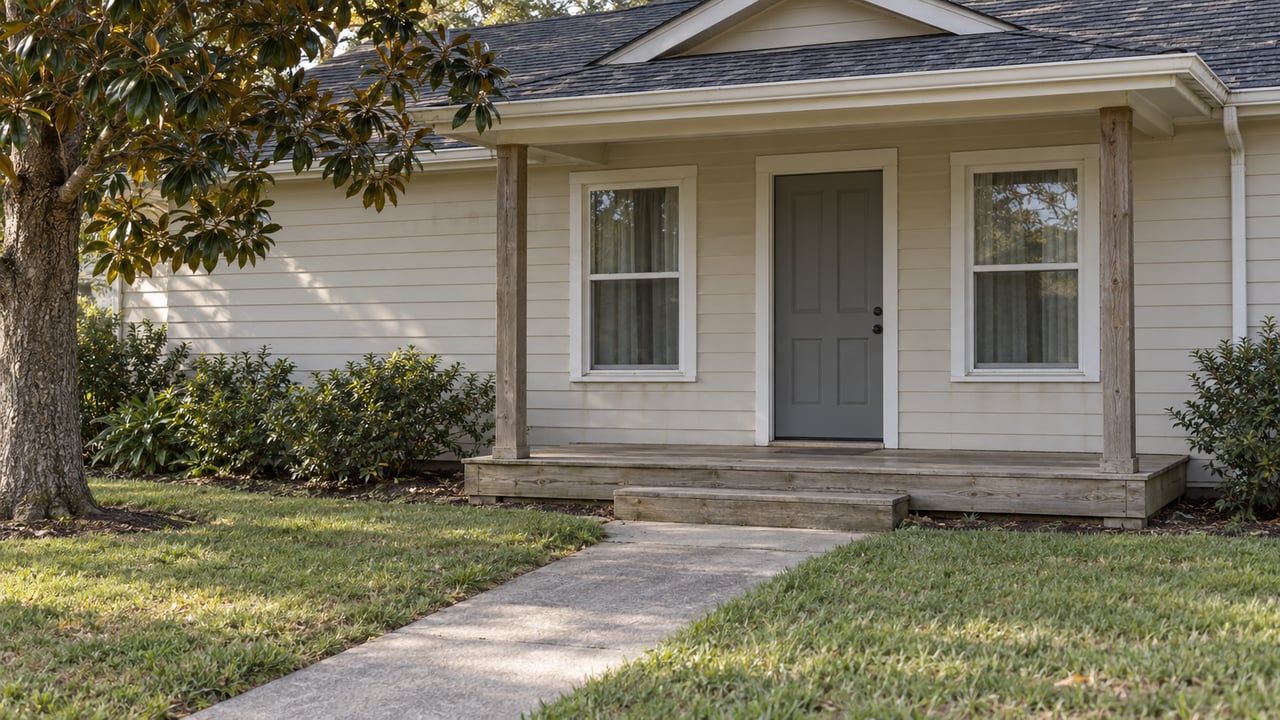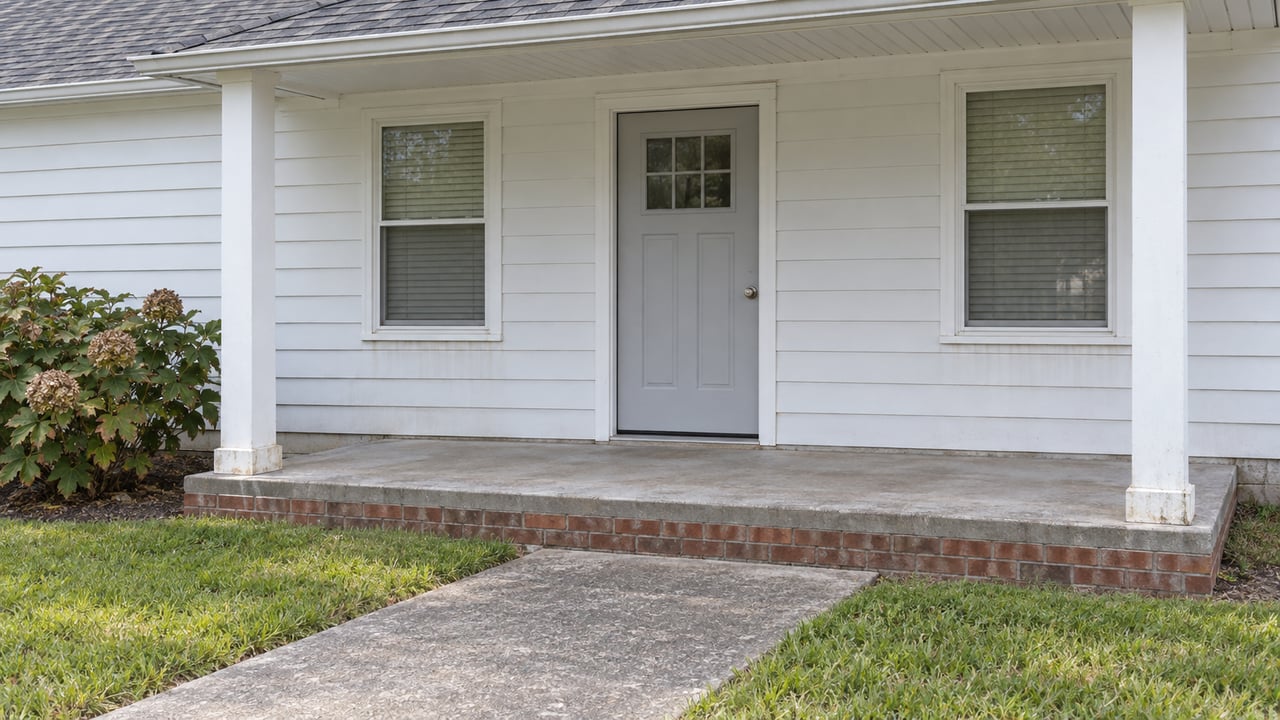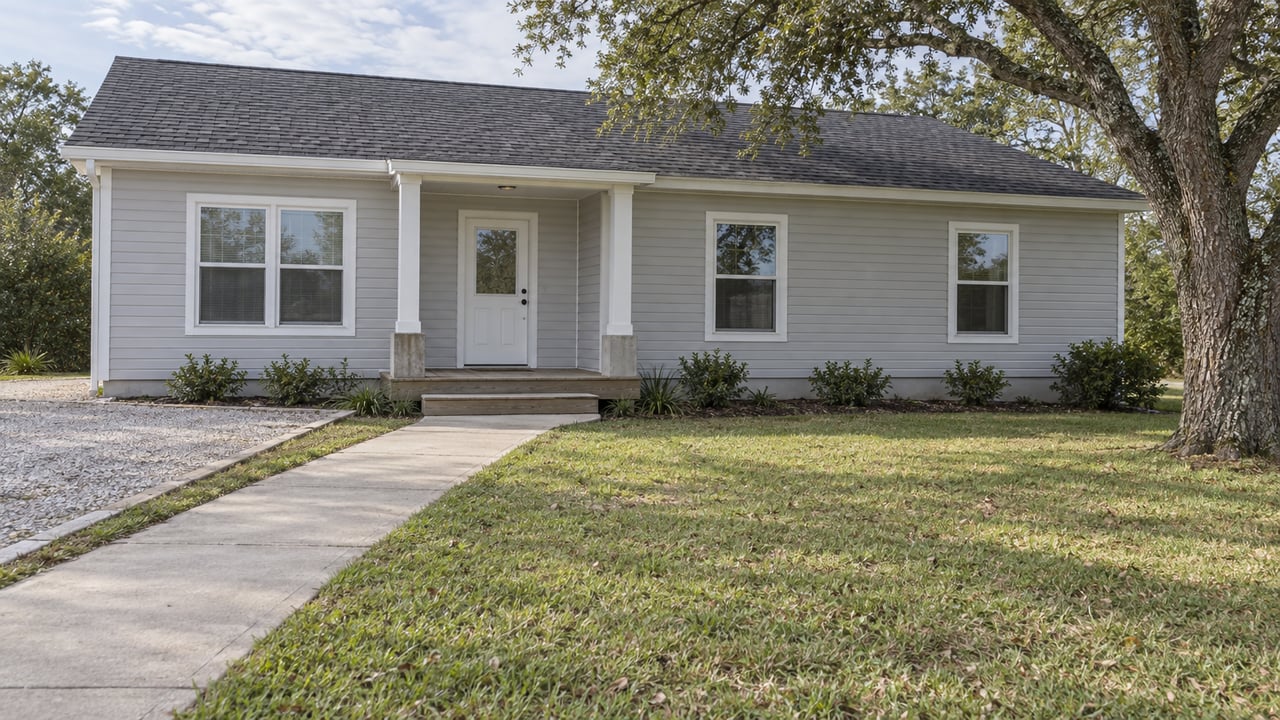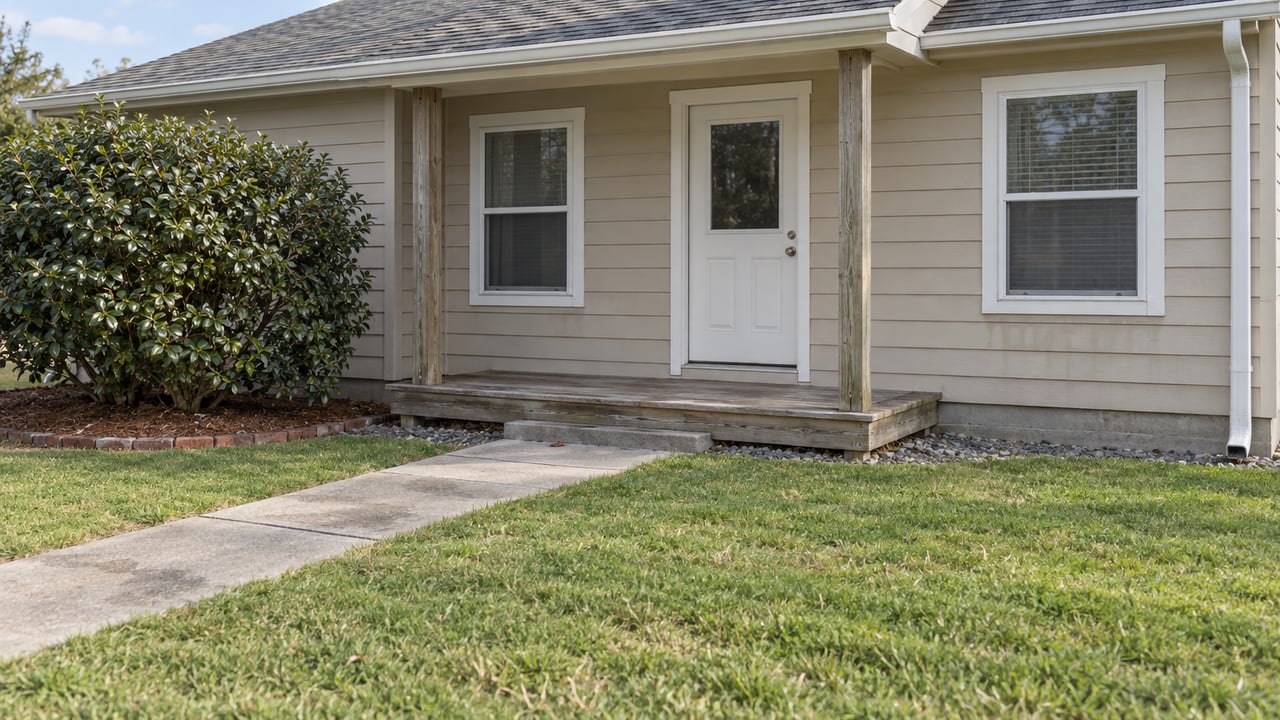
A home in the City of St. George and a comparable home inside Baton Rouge city limits share most of the same tax bill. Both pay the same parish taxes and the same school taxes. Shoppers on either side of the line also pay the same ordinary sales tax. The place where the bills differ is one line item. How large that difference is depends less on which city the home is in than on two other questions. Will the buyer claim a homestead exemption? And which fire district is the parcel in?
The reason is one sentence in the Louisiana Constitution. It explains why "St. George has no city property tax" is accurate but leaves out most of the story.
Same register, same receipt
When St. George's 2% sales tax took effect on April 1, 2025, it didn't add two points to the price of a purchase. It replaced the 2% parish and city share that applies elsewhere in East Baton Rouge Parish. The Louisiana Association of Tax Administrators' rate schedule, effective July 1, 2026, lists the ordinary combined rate as 10.50% in St. George, in Baton Rouge, and in unincorporated East Baton Rouge Parish inside the EBR school district. That is 5.50% local plus 5% state. Special economic-development districts can add more on top. The state's rate went from 4.45% to 5% on January 1, 2025, and that change applied in all three places equally.
So day-to-day spending costs the same on both sides of the line. The property tax bill is the only place to look for a difference.
Where the bills actually split
St. George's FY2027 budget states that the city levies no municipal ad valorem tax. Baton Rouge does. The East Baton Rouge Parish Assessor's 2025 millage table lists 17.94 mills in total Baton Rouge city tax. Of that, 5.44 mills go to the general fund, 0.82 to the three-platoon police system, and 11.68 to municipal fire salaries and benefits.
Roughly two-thirds of the Baton Rouge city levy pays for fire protection. Homes in St. George pay for fire protection too, through a special district. The same 2025 table lists St. George Fire District #2 at 20.00 mills and Eastside Fire District #5 at 29.00 mills. According to the emergency operations plan St. George adopted on July 28, 2026, most of the city is covered by the St. George Fire Protection District and the northern part is covered by Eastside Fire Department.
Comparing the two cities' bills therefore comes down to the Baton Rouge city line against a fire-district line. Before those two numbers can be compared, they have to be calculated the same way. Under the Constitution, they aren't. Article VII, Section 20 grants the homestead exemption against "state, parish, and special ad valorem taxes to the extent of seven thousand five hundred dollars of the assessed valuation." A few paragraphs later comes this:
"This exemption shall not extend to municipal taxes. However, the exemptions shall apply (a) in Orleans Parish, to state, general city, school, levee, and levee district taxes and (b) to any municipal taxes levied for school purposes."
The Baton Rouge city tax is a municipal tax, so it applies to the full assessed value whether or not the owner claims a homestead. The assessor lists the St. George fire district under special districts, not city taxes, so the homestead exemption reduces the amount it is charged on. The assessor also explains that residential property is assessed at 10% of estimated market value. That makes the $7,500 exemption equal to $75,000 of market value.
One house, four tax lines
Take a $300,000 home assessed at $30,000 and apply the 2025 rates to the single line item that differs:
- Inside Baton Rouge, with homestead. 17.94 mills on the full $30,000 comes to $538.20. The exemption has no effect on this line.
- St. George Fire District #2, with homestead. 20 mills on $22,500 comes to $450.00.
- Eastside Fire District #5, with homestead. 29 mills on $22,500 comes to $652.50.
- St. George Fire District #2, without homestead. 20 mills on the full $30,000 comes to $600.00. The comparable Baton Rouge home owned as a rental still pays $538.20, because its city line never received the exemption in the first place.
These are single line items, not full tax bills. Still, the order they fall in tells you something. For an owner-occupant in Fire District #2, St. George comes out about $88 a year lower on this line. In the north end, where Eastside covers fire, the line runs higher than the Baton Rouge city line. For an investor who can't claim a homestead, the Fire District #2 line runs higher as well.
Home price changes the result too, because the exemption is a fixed dollar amount and the millage is not. At 2025 rates, the Fire District #2 line and the Baton Rouge city line are equal at an assessed value of roughly $72,800, or about $728,000 in market value. Above that, a homesteaded St. George home in Fire District #2 pays more on this line than a Baton Rouge home at the same price. Below it, the St. George home pays less. That gives a family moving up to a mid-priced home and a buyer shopping at the top of the market different answers to the same question.
Most of the bill is shared by both cities. The 2025 table lists 50.60 mills of parish taxes and 43.45 mills of East Baton Rouge school taxes. Both apply in both places, and both get the homestead exemption. One part of that shared bill is changing. On June 27, 2026, voters approved a 10-year continuation of the parish library tax at 9.5 mills, replacing the 9.89-mill levy that expired at the end of 2025, according to WAFB. The change applies parish-wide, so it doesn't widen or narrow the gap between the two cities.
What the city line moves besides the bill
Tax is one difference. The other is who handles the calls an owner makes after closing. The Metropolitan Council approved a transition agreement with St. George on April 23, 2025, and the St. George council adopted it on April 28. It set July 1, 2025, as the general service-transfer date and allowed later agreements for individual services. In practice, services moved at different times:
- Permits, plan review, inspections, and code enforcement go through St. George's own department and online portal. Applications submitted before October 16, 2024, stay on the East Baton Rouge Parish site. The work is handled by the Institute for Building Technology and Safety, or IBTS, under a contract that runs through June 2030.
- Sewer tie-in permits for new construction still come from EBR Parish Subdivision Engineering.
- Streets and drainage moved to the city at the start of November 2025, again under an IBTS contract, as WBRZ reported in October 2025. The city took on more than 1,600 parish work orders and had completed about 600 in its first three months, WBRZ reported on March 24, 2026.
- Garbage, recycling, sewer, and animal control stay with the parish, and residents still use parish 311 for those requests.
- Law enforcement stays mainly with the East Baton Rouge Sheriff's Office, which also handles dispatch. St. George's 2026 police force is a part-time reserve and volunteer supplement, according to WBRZ's August 11, 2026, report.
Buyers planning a renovation will deal with the permit split first. For the city portion, St. George's building-permit page lays out the permit process.
Questions still in court
Buyers of homes rarely run into the incorporation dispute. Buyers of land and commercial property might. On June 9, 2026, a property owner filed suit in the 19th Judicial District Court. The suit asks the court to declare that St. George does not legally exist as a municipality, and it alleges that the city tried to downzone the owner's land from C-2 Heavy Commercial without following required planning procedures. Voters approved incorporation on October 12, 2019. St. George maintains that is its incorporation date. The mayor-president's office has said in the past that the date is in 2024. In a July 24, 2026, statement, Mayor-President Sid Edwards said he had not approved the Parish Attorney's decision to bring the City-Parish into the litigation. He also said he believes the issue can still be resolved without further litigation.
The 2025 transition agreement did not set an incorporation date. For areas whose status is disputed, it provided for sales tax to be held in escrow until a final judgment. On September 9, 2026, WBRZ reported that a judge allowed St. George and its Transition District to remain plaintiffs in the lawsuit over Baton Rouge's business annexations. The disputes over the annexations themselves will be decided later. For a buyer looking at commercially zoned land near the city line, it is worth confirming which jurisdiction currently controls zoning on that specific parcel.
Questions buyers ask about the line
Does a St. George homeowner pay any city property tax?
According to the city's FY2027 budget, St. George levies no municipal ad valorem tax. The fire district millage that applies to the parcel takes up much of the space a city fire levy would otherwise fill.
Are these the 2026 rates?
No. The figures above come from the assessor's 2025 millage table, which was the most recent schedule available for this post. The 2026 rates for Baton Rouge and the fire districts haven't been confirmed here. According to the Louisiana House of Representatives' constitutional amendment summary, a November 3, 2026, ballot measure would let parishes and municipalities offer additional exemptions to qualifying homeowners age 65 or older. If voters approve it, it would take effect on January 1, 2028, and it wouldn't change the standard $7,500 exemption.
Is the homestead exemption about to increase?
Not from the recent bills. HB271 in 2025 would have raised the exemption to $12,500, but it failed final passage in the House, 42 to 58. HB440 in 2026 would have let parishes add up to $5,000. House Ways and Means rejected a motion to report it, 5 to 9, on April 7, 2026.
How do I see the taxing districts for a specific address?
The assessor notes that millages vary by location and that property outside city limits may carry additional district millages. The parcel record lists which districts apply, and St. George's permit page links to city parcel lookups. This post explains how the rates work. It isn't tax advice for any particular property.
Whether you're comparing a Fire District #2 address with a Baton Rouge city address, or weighing a homestead purchase against a rental, Charlotte Johnson and Team CeejaySells can pull the taxing districts for the parcels you're considering and walk through what each line item means before you make an offer. If you already own a home on either side of the line, start with a free home valuation so the tax math rests on a realistic market value.